

Car Insurance Online :: News
SHARE

Share this news item!

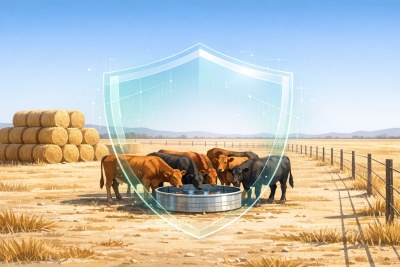
Dry Conditions Put Feed, Livestock and Insurance Planning Back in Focus

Why seasonal pressure should trigger a practical review of cover, records and contingency plans

Dry Conditions Put Feed, Livestock and Insurance Planning Back in Focus?w=400

The information on this website is general in nature and does not take into account your objectives, financial situation, or needs. Consider seeking personal advice from a licensed adviser before acting on any information.

Recent rural reporting has again highlighted the strain dry seasonal conditions can place on livestock producers, particularly where pasture growth is limited, supplementary feed is expensive and water security is becoming a daily management issue.
For many Australian farm businesses, the immediate concern is practical: keeping stock in condition, deciding whether to buy feed, move animals, agist, or sell earlier than planned.

From an insurance perspective, the key lesson is that drought pressure rarely sits in one neat category. It can affect livestock values, fencing and water infrastructure, stored fodder, machinery use, transport decisions, public liability exposures and business cash flow. A dry paddock may start as a production issue, but it can quickly become a whole-farm risk issue if decisions are made under time pressure.

Farmers should be careful not to assume that all drought-related losses are automatically covered. Many policies treat gradual deterioration, lack of feed, poor seasonal growth and ordinary business losses differently from sudden insured events such as fire, storm, theft, accidental damage or specified livestock incidents. That distinction matters. A policy may respond to some events connected with a dry season, while still excluding the broader financial impact of drought itself.

This is why policy wording, livestock schedules and asset values deserve a fresh look before conditions deteriorate further. If stock numbers have changed, if breeders have been retained at higher values, or if feed and hay are being stored in larger volumes than usual, the sums insured may no longer match the real exposure. Producers may also need to consider whether temporary agistment, contract cartage or off-farm storage creates different obligations under their policy.

Good records are also important. Livestock counts, purchase and sale records, fodder inventories, photos of stored hay, machinery maintenance notes and water infrastructure invoices can all help if an insured incident occurs during a difficult season. They also make it easier to assess whether current insurance cover levels are still realistic.

For livestock operations, the current conditions are a reminder to review how livestock insurance fits alongside broader risk controls. Insurance is not a substitute for seasonal planning, but it can form part of a stronger financial safety net when it is matched to the farm’s actual activities, stock movements and asset values.

The most useful step is to review cover before decisions become urgent. Dry seasons reward early planning, clear documentation and a realistic understanding of what a policy can and cannot do.

Published:Tuesday, 25th Aug 2026
Author: Paige Estritori

Please Note: We do not endorse any specific products or companies. Some content is sourced from third parties, including press releases, and may not be independently verified for accuracy or completeness.

Share this news item:

Rate this article

0 Comments

No comments yet. Be the first to share your thoughts.

Insurance News

Why Cyber Risk Belongs in Every Restaurant Insurance Review
26 Aug 2026: Paige Estritori
Fresh attention on cyber incidents across Australian businesses is a timely warning for restaurants, cafés and takeaway operators. Hospitality venues may not always see themselves as data-heavy businesses, but modern food service increasingly depends on connected systems: point-of-sale terminals, booking platforms, delivery apps, QR ordering, loyalty databases, rostering tools and cloud accounting. - read more
Why Fatigue Management Is Again a Truck Insurance Issue
26 Aug 2026: Paige Estritori
Recent heavy vehicle compliance activity has again put fatigue management near the top of the risk agenda for Australian transport operators. While enforcement is usually framed as a road safety issue, it also has a direct insurance dimension. Insurers assessing truck insurance risk increasingly look beyond the vehicle itself and ask how well the business controls driver behaviour, scheduling pressure, maintenance downtime and record-keeping. - read more
Why Fresh Insurance Market Data Matters at Renewal Time
26 Aug 2026: Paige Estritori
APRA’s latest general insurance data has again highlighted a point many Australian tradies are already feeling at renewal time: a healthier insurance sector does not necessarily translate into simple or immediate premium relief for small businesses. While insurers continue to operate with stronger capital buffers and improved underwriting discipline, the costs sitting behind many policies remain under pressure. - read more
What Claims Complaint Trends Mean for Salon Insurance
26 Aug 2026: Paige Estritori
Fresh complaints reporting from the Australian Financial Complaints Authority has put insurance service standards back under the microscope, with claim delays, communication issues and disputed outcomes continuing to feature in the wider financial services complaints landscape. For beauty salon owners, skin clinics, nail technicians and mobile beauticians, the lesson is practical: the moment a loss occurs is not the best time to discover that records are incomplete, policy wording is unclear or a treatment has not been properly disclosed. - read more
What NSW Insurance Levy Reform Could Mean for Trade Businesses
26 Aug 2026: Paige Estritori
New South Wales insurance buyers may be heading for an important change as reform of the Emergency Services Levy continues to attract attention across the insurance sector. The levy has long been added to many insurance premiums in NSW to help fund emergency services, and insurers have argued that this approach makes cover more expensive for households and businesses that choose to insure. - read more


Car Insurance Articles

How Your Driving Habits Affect Your Car Insurance Premiums
Your driving habits can influence how an insurer assesses your risk and prices your car insurance premium. In Australia, factors such as speeding, accident history, annual kilometres, personal or business use, where you drive and whether you use driving-feedback technology may all affect the way your policy is assessed. - read more
Comprehensive vs Third Party Car Insurance: Which Car Insurance Is Right for You?
Choosing car insurance in Australia is easier when you understand what each policy type is designed to cover. Comprehensive car insurance offers broader protection for your own vehicle and other people's property, while third party property cover is more limited and usually focuses on damage you cause to others. - read more
Understanding Add-Ons: Optional Car Insurance Coverages to Enhance Your Policy
Car insurance is a crucial aspect of responsible vehicle ownership. It provides financial protection against accidents, theft, and other unforeseen events. In Australia, having the right car insurance policy can give you peace of mind on the road. - read more
How the Car Insurance Claims Process Works in Australia
Understanding the car insurance claims process can help Australian drivers respond calmly after an accident, gather the right evidence, manage excess and repair questions, and know what to do if a claim is delayed or disputed. - read more
Don't Get Caught: Essential Tips for Avoiding Car Insurance Mistakes
When it comes to protecting your vehicle and your finances, car insurance is a crucial investment. In Australia, car insurance helps cover the costs associated with accidents, theft, and other unexpected events on the road. - read more

Knowledgebase
Liability Insurance:
Insurance that provides protection from claims arising from injuries or damage to other people or property